The Infrastructure Behind our Digital World is Closer to the Ocean Floor Than the Cloud
6/11/26, 10:00 am
For all the talk of cloud computing, artificial intelligence and an increasingly digital economy, much of the infrastructure that makes it possible is remarkably physical.
Every time data moves between countries, whether through an international video call, a cloud application, a financial transaction or an AI workload, it has to travel through real infrastructure.
Despite the visibility of satellites, most international data traffic travels through fibre-optic cables laid across the ocean floor.
These submarine networks are largely invisible to the people who rely on them. But as dependence on cloud, AI and cross-border data grows, international connectivity can no longer be considered simply in terms of capacity.
Resilience, route diversity, scalability and the ability to support decades of digital growth matter just as much.
More than a cable
The term submarine cable can make the technology sound relatively simple: a cable running from one country to another.
In reality, a submarine network is an entire system.
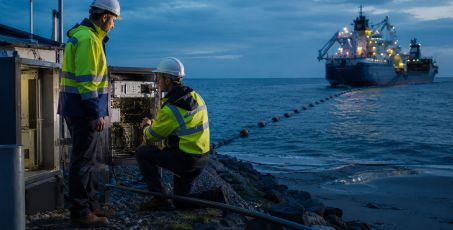
The cable itself may extend for thousands of kilometres, supported by optical technology, repeaters, branching units, power systems, landing infrastructure, terrestrial connections and network monitoring equipment.
And the infrastructure surrounding it matters just as much.
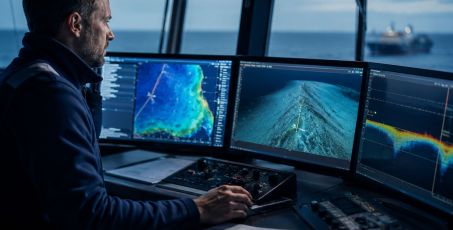
Routes need to account for seabed conditions, water depth, existing infrastructure, shipping activity, environmental considerations and other potential hazards. Landing locations have to connect offshore infrastructure with terrestrial networks. Regulatory, environmental and technical requirements may differ in every jurisdiction the system reaches.
Manufacturing, marine operations, installation, testing and commissioning then need to come together as part of the same program.
That makes a submarine network much more than a telecommunications product.
It is major infrastructure - bringing together technology, engineering, manufacturing, marine operations, logistics, regulation and project delivery, often across multiple countries and jurisdictions.
Why submarine networks matter now
Demand for international connectivity is being shaped by several forces at once.
Cloud regions and hyperscale data centres are expanding. AI workloads are increasing the movement of data between locations. Digital media and content delivery continue to grow, while governments are placing greater emphasis on digital resilience, sovereignty and critical infrastructure.
For Australia, New Zealand and the Pacific, geography adds another layer of complexity.
The region depends on international connections that cross significant distances, supporting cloud services, digital trade, government operations, financial services and participation in the wider digital economy.
As dependence on those connections grows, infrastructure planning has to account for more than capacity alone.
A market may have substantial international bandwidth, but concentration across a limited number of routes can still create vulnerability.
That is why route diversity, landing options, resilience and the ability to scale over time are becoming increasingly important considerations in how international connectivity is planned.
The question is no longer simply how much data a network can carry.
It is also how reliably, directly and sustainably that capacity can connect economies over the long term.
Engineering for decades, not years
Submarine infrastructure is planned on a very different horizon from much of the technology it supports.
A smartphone might be replaced every few years. Software can be updated overnight. A submarine cable system, by contrast, is expected to remain in service for decades, often in environments that are extremely difficult to access once installation is complete.
NEC submarine systems are designed for an operating life of more than 25 years and can be installed at depths of up to 8,000 metres. Since entering the submarine cable business in 1964, NEC has laid more than 450,000 kilometres of cable globally - enough to circle the Earth approximately 11 times.
That operating life has significant implications for how these systems are designed.
Capacity, route architecture, resilience, maintenance, upgradeability and future technology requirements all need to be considered beyond the immediate needs of a project.
Digital demand may look very different ten or twenty years after a network enters service.
Cloud architectures will evolve. AI workloads will change. Data centres will expand and new ones will emerge. Patterns of international data movement will shift.
Submarine technology is evolving alongside that demand. Advances in optical transmission, fibre technologies, energy-efficient design and open cable architectures are creating greater capacity and more flexibility over the life of the system.
Long-life infrastructure therefore needs to be designed not only for the demand it serves today, but for how that demand may change over time.
International infrastructure is delivered locally
Submarine networks may span oceans and multiple countries, but every landing point is local.
Each brings its own regulatory, environmental, technical and stakeholder requirements.
A system can be designed as one international network while still needing to navigate different approval processes, landing environments, terrestrial connections, infrastructure partners and operational considerations in each market.
Managing those interfaces is an important part of turning a global network design into infrastructure that can actually be delivered.
For Australia, New Zealand and Pacific markets, that makes the combination of international expertise and regional engagement particularly important.
NEC Australia provides a local pathway into NEC Corporation's global submarine network capability, connecting regional requirements with the specialist engineering, technology and project expertise required to support international infrastructure.
The infrastructure we rarely see
Much of today's technology conversation happens at the application layer: AI models, cloud platforms, digital services and the experiences they enable.
But none of it exists without physical infrastructure.
Behind every seemingly instantaneous digital interaction is a network of data centres, terrestrial fibre, landing stations and submarine cables moving information across extraordinary distances.
Most of us will never see that infrastructure.
But as economies become more digital and international data flows increase, the resilience of the networks beneath the surface will have a direct bearing on what happens above it.
That makes submarine networks more than a telecommunications story.
They are a critical part of the region's digital infrastructure.
The future may be increasingly digital, but the infrastructure that enables it is very real - and much of it lies beneath the ocean.